

Vaccine Refusal Forms from Doctors: What Parents Should Know

Your doctor hands you a vaccine refusal form for your child and asks you to sign it. Many parents hesitate, wondering if signing will create legal problems or be used against them later.
The legitimate purpose of these forms is to clarify that the doctor is not responsible for the choices you make. When you sign a properly written form, you are doing exactly what medical freedom means—accepting responsibility for your own healthcare decisions.
The problem? Not all vaccine refusal forms are properly written. Some go far beyond documenting your decision and instead require you to make admissions that could be harmful.
So how can you tell the difference?
Understanding Vaccine Refusal Forms: What Parents Should Know
Vaccine refusal forms serve a legitimate purpose in the healthcare system. When a doctor asks a parent to sign such a form, the physician is documenting that the parent has been informed of the doctor's medical opinions regarding vaccines and is choosing to decline or delay certain immunizations. Essentially, the doctor is establishing that the parent, not the healthcare provider, bears responsibility for this decision.
This arrangement should not be problematic for parents who advocate for medical freedom. In fact, it aligns with the principle that parents—not doctors or government officials—hold the authority and responsibility to make healthcare decisions for their children.
The Core Issue: Where Forms Cross the Line
Parents who choose to delay or decline vaccines generally have no objection to signing a statement that acknowledges two things: first, that they accept responsibility for their decision, and second, that their doctor has communicated their professional opinions and recommendations. These are reasonable acknowledgments that simply document the nature of the conversation and the decision-making process.
The problem arises when vaccine refusal forms go far beyond this basic documentation. Some forms require parents to essentially make admissions of guilt, to concede that they are putting their children at risk, or to agree to statements that characterize their decision in extreme terms. The critical distinction is in the language used. When a form states, "I, the doctor, have informed you of these risks and benefits," that is typically acceptable. However, when a form requires parents to write, "I understand that..." or "I agree that..." followed by inflammatory statements, the form crosses an important line.
When Forms Cross the Line
Some healthcare providers use forms with language like this that goes far beyond reasonable documentation. For example, one form received by a family included the following statements:
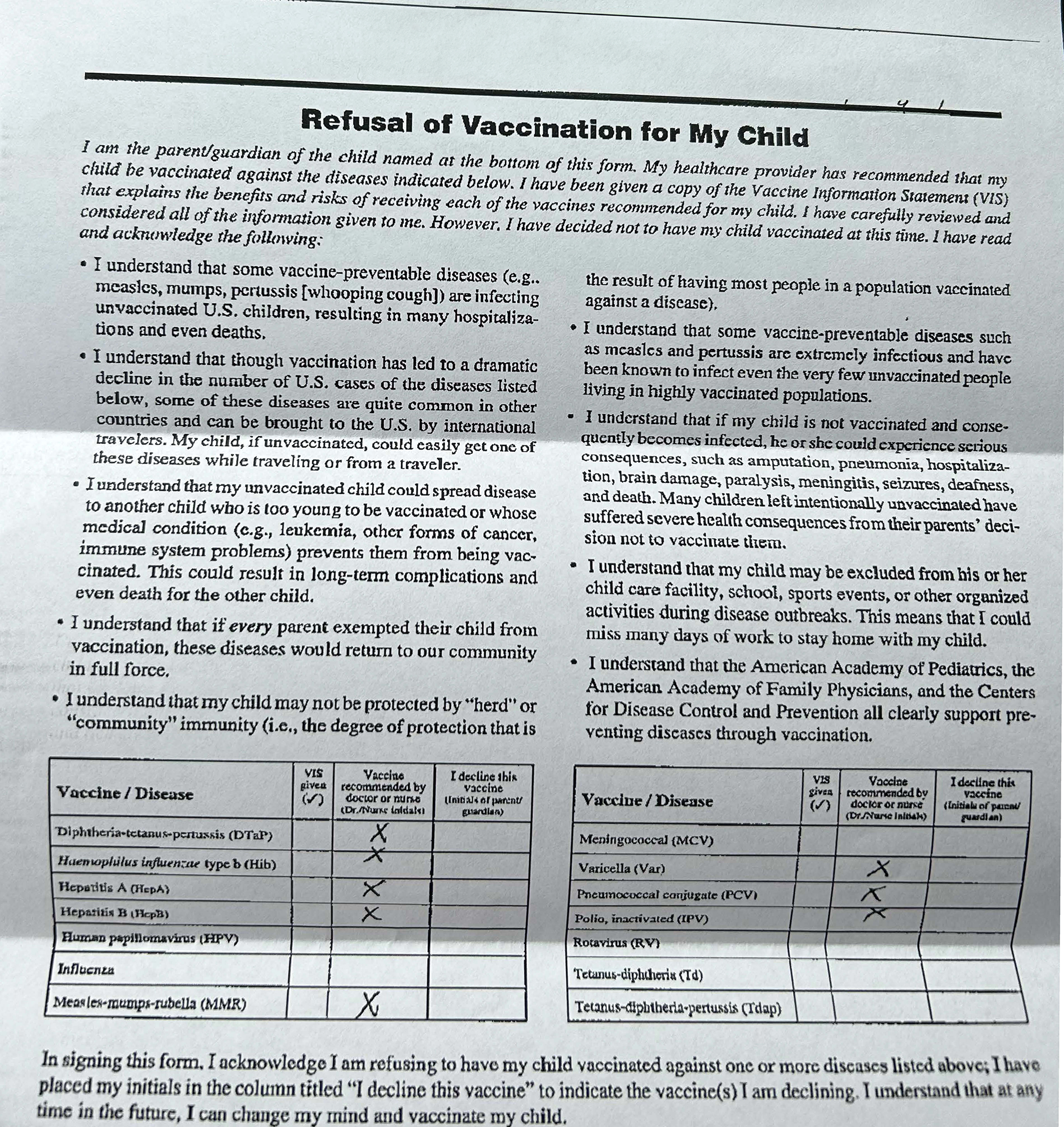
This type of language does more than document informed consent and acceptance of responsibility. It makes parents assent to implications that they are deliberately and recklessly endangering their children and others. Such wording goes far beyond what is necessary for liability protection and instead appears designed to shame or intimidate parents into compliance.
What Families Can Do
Heritage Defense families who encounter problematic vaccine refusal forms have options. You receive access in your Members-Only portal to alternative vaccine refusal forms that provide clear documentation without inappropriate language. If a healthcare provider asks you to sign an objectionable form, you can print out and take one of our forms to your appointment instead. Many providers will not even notice that you have brought an alternative form. If they do, you can simply explain that it documents the same basic information without the problematic admissions.
Additionally, if a healthcare provider insists that you must use their own form, Heritage Defense members can consult directly with an attorney at any time. These attorneys provide step-by-step guidance to help parents understand their rights and navigate these situations with confidence. Note, however, we do not recommend that you inform your provider that you are calling your attorney as this can escalate matters unnecessarily.
Parents have both the right and the responsibility to make informed healthcare decisions for their children. Vaccine refusal forms can document this reality without requiring parents to make inappropriate admissions or accept characterizations of their decisions that go beyond reasonable informed consent.
Other Recent News

Information on this site is not legal advice or a substitute for legal advice.